The 1986 shutdown of Reserve Mining erased 500 jobs, forcing Silver Bay to redefine itself from a company town.
Robin Washington
MInnesota Star Tribune August 1, 2026
On July 31, 1986, Lee and Myrna Benoit’s lives changed forever, along with nearly 3,000 other residents of Silver Bay, Minn. Reserve Mining Company, which built the company town back in 1954, closed its doors for good. In a community of fewer than 1,000 households, nearly 500 jobs were gone.
The Benoits did what many of their former co-workers were struggling to do: find a job, anywhere. They left their comfortable Silver Bay home for a one-bedroom apartment in St. Paul. There, Myrna found work and Lee spent his days chasing leads after nearly three decades at Reserve, where he’d been the quality control manager.
“You can sit around [in Silver Bay] and wait and wait,” Myrna told me then, “but you just get more depressed.”
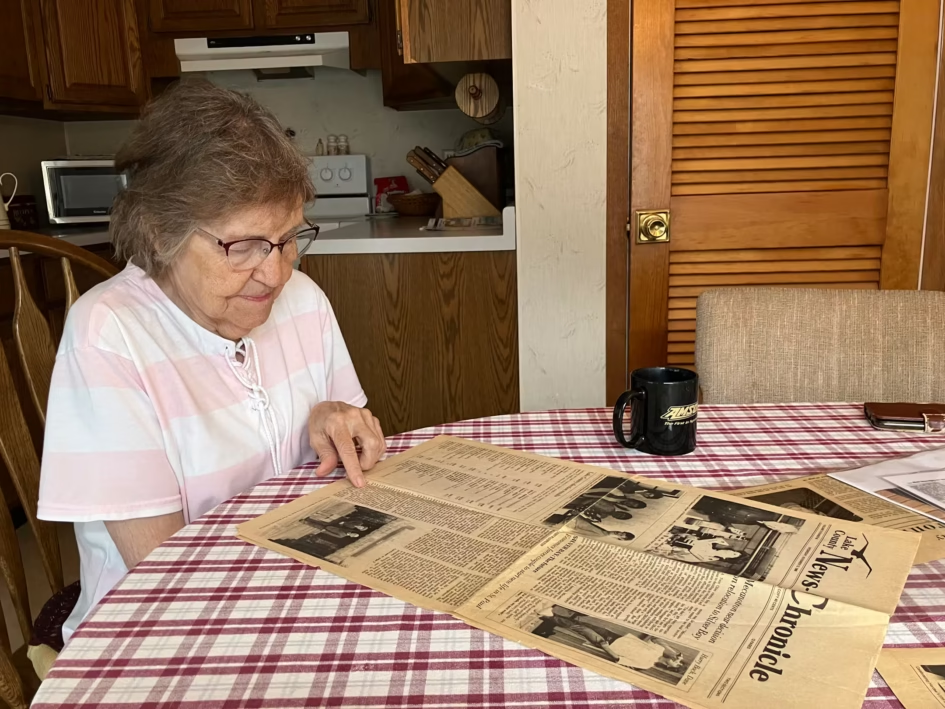
I know the Benoits’ story because they were among people I interviewed after arriving less than a month later as editor of the now-defunct Lake County News-Chronicle in nearby Two Harbors. If the shutdown had a huge impact on the region, it also made a big impression on me as an early career journalist. Now, 40 years later, I wanted to find out what happened to the folks who lived it firsthand.
One is Donna Moe, who worked under Lee Benoit at Reserve. Unlike him, she didn’t leave.
“We’re not going anywhere. I will figure this out somehow,” she recalled telling her youngest son, who was still in high school. “You’re going to be a senior, and that’s it.”
Moe had already made history as Reserve’s first woman employee. Unlike female pioneers on the Iron Range whose experiences with workplace harassment were later portrayed in the film “North Country,” she recalls being spared most of that treatment. As a single mother, however, staying in Silver Bay meant replacing a mining paycheck.
“Even prior to that, during one of the long layoffs, I was taking classes for nursing,” she said. “As time went by, I was hired in the nursing home in Two Harbors.”
Reserve’s closure didn’t affect only the people who worked there. At its peak, Reserve employed about 3,000 people between its Babbitt mine and Silver Bay processing plant. But its economic reach extended far beyond the plant gates.
Kent Kaiser never worked for Reserve, nor did his parents. His father taught school, and his mother worked at the local credit union where the parking lot overflowed with repossessed items, he wrote in his book, “Company Town: An Oral History about Life in Silver Bay, Minnesota.”
“We had always been poor,” Kaiser told me last week, citing low teachers’ salaries. But with the closure, the Kaisers suddenly found themselves among Silver Bay’s better-off families.
“We hadn’t changed much, but the environment sure did.”
Yet sympathy for Silver Bay’s plight wasn’t universal, even in northeast Minnesota. Ed Maki, a “displaced worker,” as the U.S. Department of Labor was then terming former Reserve employees, recalled one incident of blatant hostility. He was sitting outside a dressing room at the Montgomery Ward store in Duluth, waiting for his wife, when a stranger asked where he was from.
“As soon as he found out I was from Silver Bay, he said, ‘I don’t feel sorry for you people one damn bit,’ and he got up and left.”
I recall similar resentment in Two Harbors, which had suffered its own economic “Black Friday” in 1963 when the railroad that brought Iron Range ore to its docks shut down. At that time, Silver Bay was basking in the glow of its still-new streets and schools.
Likewise, I sensed indifference on trips to the Twin Cities, where unemployment was low. Those attitudes were juxtaposed against images seared in my mind of displaced workers gathering at 8 a.m. at the Silver Bay job club, sleeves rolled up, filling out applications to anywhere.
As it happened, I, too, had been job hunting. At the same time I applied for the Two Harbors position, I’d tossed my hat in for a fellowship at WGBH-TV in Boston, the public broadcasting powerhouse. To my surprise, I made the first cut.
I flew out for the interview only to come down with a fever that left me delirious. Somehow, I made it through a panel of journalism heavyweights — the executive producer of NOVA among them — until one asked: “What will you do if we don’t give you this fellowship?”
“I wasn’t going to tell you,” I replied, “but I took another job after I applied.”
I handed out copies of the News-Chronicle. The panelists leafed through them, impressed, until one read from the classifieds: “Silver Bay: Three bedrooms, two baths, two-car garage — $20,000!”
The room erupted in laughter. My delirium answered back.
“That’s not funny!” I railed. “Those people bought those houses for three times that amount and still can’t sell them, and it’s inappropriate for you to sit here in your so-called Massachusetts Miracle and laugh at them.”
Dead silence. I got the fellowship.
I spent 17 years in Boston. But the region kept calling, and I returned, eventually becoming the editor of the Duluth News Tribune, and heading up the shore whenever possible.
So what happened to Silver Bay?
Most sobering is that a third of the population moved away, with the town plummeting from 2,917 in 1980 to 1,894 in 1990. My tirade at WGBH hadn’t been an exaggeration, and many departures came with a fire sale. Tracy Thun, who works at the library, bought a house not long after the closure for $12,000. “And my brother bought a little house for $6,000,” she said.
The plant reopened after three years, operating today as Cleveland-Cliffs’ Northshore Mining, employing about 500 between Silver Bay and Babbitt.
Down the shore, Two Harbors reinvented itself as a tourist destination. Silver Bay began touting attractions of its own. Among them is Black Beach, the striking shoreline created by taconite tailings — the very waste that led to Reserve’s downfall after a federal court in 1974 ordered the company to stop dumping in Lake Superior, triggering a $300 million pollution-control project.
Kent Kaiser remembers even teenagers being aware of the case, with one classmate spray-painting “F— Miles Lord” in protest of the judge whose ruling helped seal the town’s fate.
“In the ’50s, public officials were begging the mining company to move in and put up the plant,” he said. “And then, 20 years later [with the court case] it was the opposite.”
Now of St. Paul, Kaiser is among those who left Silver Bay but returns often to visit family. Donna Moe is still there, too. Her nursing training proved even more rewarding when the Minnesota Veterans Home was built across from her house.
And the Benoits?
I last saw them outside their St. Paul apartment, where, after months of filling out applications, Lee Benoit finally found a job — in quality control, the work he knew best.
But it didn’t last.
“In the spring of ’87, that company let him go,” his daughter, Nola Benoit, told me.
The couple moved back to Silver Bay. Myrna briefly worked for the U.S. Forest Service in Tofte before joining another mining company, EVTAC, in Eveleth. They sold their Silver Bay home and moved to Virginia, remaining until Lee’s death in 2003. Myrna retired and moved outside of Duluth, dying in 2015.
Though Lee never worked again, Nola described their lives as fulfilling, even joyful, once they retreated from the big city. Even with the adversity, they were among the lucky.
Wade LeBlanc, Silver Bay’s mayor, comes from a family whose fuel business largely escaped the turmoil of Reserve’s closure. Even so, he recognizes the town that emerged is not the one he grew up in.
“The town has persevered,” he said. “Is it ever going to go back to be like it was? No.”
Unlike 40 years ago, Silver Bay is no longer defined by a single employer, even with the plant reopened. Perhaps the last vestige of that thinking came four months after Reserve failed, when a Twin Cities robotics manufacturer teased moving there and eventually creating 250 jobs.
But first, company officials told 800 people packing William Kelley High School’s auditorium, locals would have to buy shares in the firm, raising $250,000. Then they would start by hiring 12-16 employees.
Though we weren’t invited, our little paper got wind of the meeting, and in an editorial, I did the math: 16 jobs at $15,000 each equaled $240,000 — roughly the amount they were asking for. Silver Bay residents would essentially be paying for the jobs themselves.
The move never happened. Three years later, the company was $1.3 million in debt, in IRS trouble, and under new ownership.
With a more diverse economy today centering the outdoors, LeBlanc rattled off a list of improvements in Silver Bay:
“We got a paved trail now that goes from the arena down to Beaver Bay, then all the way to Gooseberry Falls,” he said. “There’s a new trailhead center that just opened this May that connects all the hiking, biking, ATV and snowmobile trails. And a new marina was built since the mine closure.”
Still, there are challenges, most notably the impending closure of Aspirus Lake View Silver Bay Clinic. The closest clinic will now be in Two Harbors. It’s a particular concern for retirees, now an important part of the economy who place fewer demands than young families for schools and other services.
“The amenities are far less and few and far between. But you know, for the people that live here, it’s enough,” said LeBlanc.
“I think it’s the best place in the world.”

 WordPress